Understanding the Pros, Cons, and Limitations of ERMI Testing
At SQS IEPS, one of the most common questions we receive is:
“Do you perform ERMI testing?”
The short answer is no. While ERMI sampling can provide useful research data in very specific situations, we do not utilize ERMI testing as part of our standard mold inspection or indoor environmental assessment process.
Our decision is based on years of field experience, current building science, and the practical limitations associated with ERMI interpretation in real-world buildings.
We believe our clients deserve inspections that are scientifically grounded, actionable, and focused on identifying actual moisture and mold problems within the structure—not simply generating a numerical score that may be misunderstood or misapplied.
What Is ERMI Testing?
ERMI stands for Environmental Relative Moldiness Index. It was developed by the United States Environmental Protection Agency (EPA) as a research tool to compare mold burdens in homes for epidemiological studies.
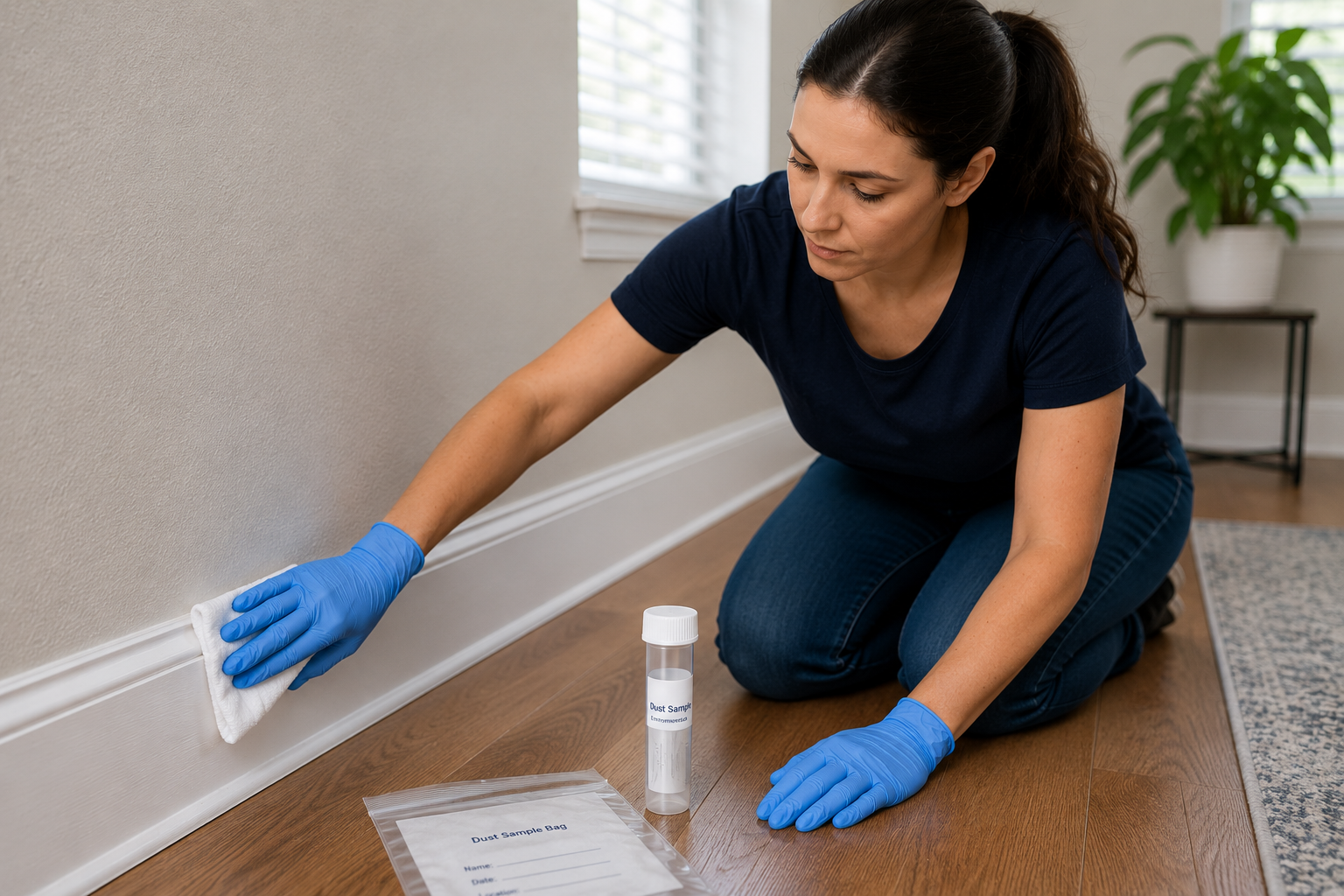
The test analyzes settled dust collected from a building and uses DNA-based technology called qPCR (quantitative polymerase chain reaction) to identify and quantify specific mold species.
The laboratory then calculates an “ERMI score” based on the concentration of certain mold species categorized into two groups:
- Group 1 molds – molds associated with water-damaged buildings
- Group 2 molds – common outdoor molds frequently found indoors
The resulting score is intended to estimate the relative mold burden of the building compared to a national database of homes.
The Pros of ERMI Sampling
To be fair, ERMI testing does have some advantages.
1. It Can Detect Hidden Mold Reservoirs
ERMI testing evaluates settled dust, which accumulates over time. This means it may identify mold species that are not currently airborne during the inspection. In some situations, this can help identify historical or hidden contamination sources.
2. It Identifies Mold Species Through DNA Analysis
Unlike traditional air sampling, ERMI testing uses DNA analysis rather than visual spore identification under a microscope. This allows laboratories to identify certain species with greater specificity.
3. It May Be Useful for Research Purposes
ERMI was originally designed for large-scale research studies—not building diagnostics. In academic or epidemiological settings, it can help researchers compare mold burdens between groups of homes.
4. It May Help Sensitive Individuals Gather Additional Data
Some clients suffering from chronic health concerns or mold sensitivity seek ERMI testing as part of a broader medical or environmental investigation. While we understand why people pursue this information, we believe it should never be interpreted in isolation.
The Problems and Limitations of ERMI Testing
Although ERMI testing has some benefits, there are significant limitations that prevent us from relying on it as a diagnostic tool for mold investigations.
1. ERMI Was Never Designed for Individual Building Diagnostics
This is perhaps the most important point.
The EPA itself has stated that ERMI was developed as a research tool and not as a stand-alone method for determining whether a building is “safe” or “unsafe.”
Unfortunately, ERMI scores are often misused to make broad conclusions about a home’s condition without considering:
- Moisture conditions
- Building defects
- Humidity
- Ventilation
- Occupant behavior
- Visible mold growth
A single number cannot accurately describe the complexity of an indoor environment.
2. Dust Does Not Tell You Where the Problem Is
ERMI analyzes dust—not active growth.
Dust accumulates from many different sources over weeks, months, or even years.
A high ERMI score does not identify:
- Where the mold is located
- Whether the mold growth is active
- Whether the issue is historical or current
- Whether the contamination source has already been corrected
In many cases, we have inspected homes with elevated ERMI scores but no active moisture intrusion or mold growth. Conversely, we have found severe hidden mold problems in homes with relatively modest ERMI results.
3. ERMI Scores Are Easily Influenced by Lifestyle and Housekeeping
ERMI results can be heavily affected by:
- Cleaning frequency
- Pets
- Open windows
- Outdoor agriculture
- Geographic location
- HVAC filtration
- Indoor humidity
- Dust accumulation
- Occupancy levels
For example, rural homes, farm properties, older homes, and homes without HVAC systems often accumulate greater biological dust loads naturally. This does not always indicate a dangerous indoor mold condition.
4. ERMI Often Creates Unnecessary Fear and Anxiety
Unfortunately, ERMI scores are frequently presented without proper context.
Clients are sometimes told their home is “toxic” based solely on a numerical result, even when no active mold amplification source has been identified.
We believe fear-based interpretations are irresponsible.
Mold investigations should focus on:
- Moisture intrusion
- Building science
- Humidity control
- Visible fungal growth
- Material conditions
- Air quality trends
- Occupant exposure pathways
Not simply a score on a laboratory report.
5. ERMI Does Not Replace a Proper Mold Inspection
No laboratory test can replace a thorough building investigation performed by a trained inspector.
At SQS IEPS, our assessments focus on identifying:
- Moisture sources
- Building defects
- Humidity conditions
- Condensation issues
- Crawl space contamination
- HVAC deficiencies
- Water intrusion pathways
- Hidden mold reservoirs
- Indoor environmental conditions
We use a combination of:
- Visual inspection
- Moisture mapping
- Hygrometry
- Thermal imaging
- Air sampling when appropriate
- Surface sampling when appropriate
- Building science analysis
This approach provides actionable information that helps clients solve problems—not just interpret laboratory data.
Our Philosophy on Mold Testing
At SQS IEPS, we believe mold inspections should answer three critical questions:
- Is there an active moisture problem?
- Is there active mold growth or amplification?
- What corrective actions are necessary to improve the environment?
ERMI testing often fails to answer those questions clearly.
While we respect the ongoing research surrounding mold exposure and indoor environmental illness, we believe the most reliable assessments come from combining:
- Building science
- Moisture investigation
- Visual evidence
- Targeted sampling strategies tailored to the structure itself
Every building is different. Every moisture problem is different. And every inspection should be approached with careful analysis—not reliance on a single numerical index.
Final Thoughts
ERMI testing is not inherently “bad,” but it is frequently over-relied upon and misunderstood. In our professional opinion, it should never be used as the sole determining factor when evaluating the condition of a home or building.
Our goal is to provide clients with practical, defensible, and solution-oriented assessments based on real-world building conditions. That is why we focus on comprehensive inspections and targeted investigative methods rather than ERMI sampling alone.
If you are concerned about mold in your home or building, the most important step is identifying and correcting the underlying moisture source.
Mold is a symptom of a water or humidity problem—and solving that problem is what ultimately improves indoor air quality.