The Part of Every Job Nobody Wants to Talk About
There’s a moment on pretty much every crawl space inspection where the homeowner walks me over to the hatch, hands me a flashlight like I’m about to go spelunking, and says some version of the exact same thing. “Honestly, I have no idea what’s down there.” Every single time. Doesn’t matter if it’s a starter home somebody closed on six months ago or a place that’s been passed down through three generations of the same family. Nobody knows what’s under their own floor, and there’s usually this little flash of embarrassment when they say it, like they should’ve checked years ago and just never got around to it.
Here’s the thing though, I really don’t think that’s on them. Nobody teaches you to think about your crawl space. It’s not part of the mental checklist most people run through when they think about taking care of a house. You think about your roof because you can literally see it up there. You think about your water heater because it starts making that awful groaning noise right before it dies. Your crawl space just sits there, dark and quiet and completely out of sight, doing whatever it’s doing, for years at a stretch, without ever once reminding you it exists.
What Actually Changed the Way I Think About This Job
Early on, I sort of thought of crawl space work as the unglamorous cousin of the job, the part where you’re literally lying on your stomach army crawling past cobwebs while the homeowner waits upstairs, hoping you don’t find something bad. And look, that part’s real, my knees will confirm it. But after enough of these, a pattern starts jumping out at you that honestly caught me off guard the first few times. The crawl space is almost never the part of the house people think about, and it’s almost always the part actually driving whatever problem they called about in the first place. Somebody calls because of a smell in the kitchen, and it turns out the actual source is fifteen feet away, straight down, through a floor they’ve walked over ten thousand times without a second thought. If you’ve been quietly looking into crawl space inspection because some smell or symptom in the house just doesn’t have an obvious explanation, that disconnect between where you notice a problem and where it’s actually coming from is way more common than people expect.
Why Something So Small Ends Up Mattering So Much
A crawl space is small, relatively speaking, compared to the rest of the house. But it sits directly under literally everything. Every room, every hallway, every closet has a crawl space right below it, and it’s all connected up through gaps around plumbing, wiring, ductwork, and honestly just the natural seams of construction that were never meant to be airtight in the first place. Warm air inside a house rises, and as it climbs, it pulls air up from below to fill the space it left behind. Which means whatever’s sitting in that crawl space isn’t staying put down there politely. It’s working its way up into your living space this entire time, whether you’re thinking about it or not, whether you even remember the crawl space exists or not.
That’s genuinely one of the harder things to get across to people the first time, because it sounds almost too simple to actually be true. You’d think a closed off space under the house would just, you know, stay separate. But houses don’t work that way. They breathe, constantly, and a huge chunk of that breathing happens right through the crawl space, quietly, in the background, every single day.
What Actually Gets Found Down There
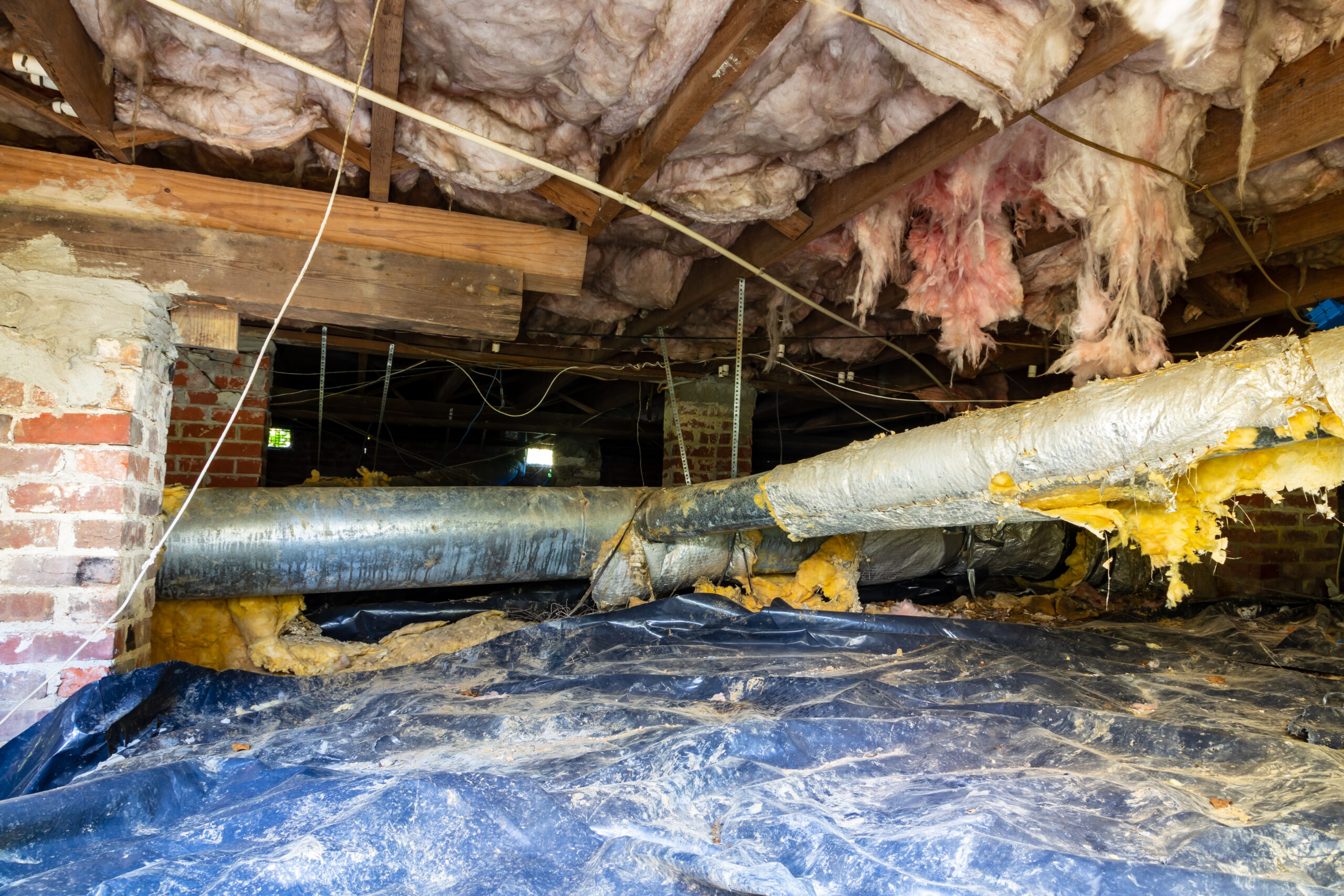
Most of the time, honestly, it’s not dramatic. A little more moisture than there should be. Insulation that’s sagging or has fallen right off the joists. A vapor barrier that’s torn, or missing entirely, or was put in years ago and just wasn’t installed right to begin with, which happens more than you’d think. Every so often it’s something bigger, standing water after a hard rain, mold visibly climbing up a support post, signs of a pest problem that’s clearly been going on way longer than anyone upstairs realized. But even the boring, unremarkable stuff matters. Moisture sitting in a crawl space doesn’t stay boring for long if nobody deals with it.
Why the Seasons Actually Change What’s Happening Down There
People tend to picture their crawl space as this static, unchanging thing, same year round, which honestly isn’t true at all. Spring is usually the worst of it around here, with snowmelt and heavy rain pushing groundwater right up against the foundation and finding its way in through cracks or drainage that’s just not keeping up. Summer brings humidity, and if the crawl space is vented to the outside the old fashioned way, that humid outside air comes right on in and condenses on the cooler surfaces down there, which is basically a perfect setup for mold even without an actual leak anywhere involved. Fall tends to be the quiet stretch, though it’s also often when moisture problems from earlier in the year finally show up as a smell or a symptom upstairs, since it takes a while for things to actually get bad enough that anyone notices. And winter brings its own headaches too, frozen pipes, condensation from the temperature swing between the crawl space and the rest of the house, insulation problems suddenly a lot more obvious once the heating bill jumps.
Why One Look Years Ago Doesn’t Really Tell You Much
This is part of why a single inspection from a few years back doesn’t actually say a whole lot about what’s happening under your house today. Conditions shift with the seasons, and a crawl space that looked totally fine during a dry inspection back in October can be a completely different story after a wet spring rolls through. It’s also why buyers sometimes get a false sense of security from an inspection that just happened to land during a dry stretch, only to run into moisture issues the following spring that, honestly, were probably always going to show up eventually anyway.
That Whole Vented Crawl Space Debate
For decades, the standard advice was to vent crawl spaces straight out to the outside, the idea being that airflow would keep everything dry. Made sense on paper. In practice, it turns out venting a crawl space to humid outside air, especially in a climate like ours where summer humidity gets pretty heavy, often does the exact opposite of what it was supposed to do. That humid air comes in, hits the cooler surfaces under the house, and condenses right there on the spot, creating precisely the moisture problem venting was supposed to prevent in the first place. Kind of ironic when you think about it.
That’s a big part of why a lot of the industry has shifted toward encapsulation instead, sealing the crawl space off completely with a heavy duty vapor barrier, closing up the vents, and controlling the environment down there directly instead of leaving it at the mercy of whatever the weather’s doing outside that day. It’s not automatically the right call for every home, older homes and certain foundation types have their own quirks to consider, but it’s worth knowing this shift happened, and worth asking about if your crawl space is still running the old vented setup from decades back.
Why I’m Not the One Who Should Talk You Into Encapsulation
Here’s something worth being upfront about. I’m not going to be the one telling you whether encapsulation is right for your specific house, mostly because SQS doesn’t do that kind of work, and honestly, I’d rather you hear that recommendation from someone who isn’t also the one who’d be doing the installation and profiting from the answer. What I can do is tell you the truth about what’s actually happening in your crawl space right now, moisture levels, mold presence, vapor barrier condition, so whoever you do talk to about fixing it is working off real numbers instead of a guess and a sales pitch.
What Actually Gets People to Finally Call
After enough of these conversations, a pattern shows up in what actually pushes someone to pick up the phone. It’s rarely the crawl space itself. It’s a kid with a cough that won’t quit through an entire school year. It’s an allergy that never really lets up, even outside of allergy season, no matter what somebody tries. It’s a musty smell that’s been hanging around so long the family stopped noticing it, until a guest mentions it out loud and suddenly everyone’s paying attention. Or it’s buying a house and the inspector tossing off one quick line about the crawl space almost as an afterthought, buried in a much longer report, that ends up mattering more than anything else on the page. It’s also why so many calls come in specifically asking for mold testing Springfield MO homeowners search for, the same certified crew doing the crawl space work in the first place, and the same air quality testing Springfield MO relies on for everything from crawl spaces to full home assessments.
The Money Side People Don’t See Coming
There’s a cost angle here too that catches people off guard more than you’d expect. Moisture sitting in a crawl space long enough doesn’t just mess with your air quality. It can rot floor joists, warp subflooring, and slowly chip away at the structural wood holding up everything above it. I’ve walked into homes where what started out as a totally manageable moisture issue turned into a real structural repair simply because nobody looked at it for years and years. The inspection itself is a small cost. What it can end up saving you from usually isn’t.
What an Actual Inspection Looks Like
It’s usually pretty quick, honestly, way less dramatic than people build it up to be in their heads before I show up. I check moisture levels throughout the space, look at the condition of the vapor barrier and insulation, check for visible mold or any signs of past water intrusion, and take real time air quality readings with InstaScope, essentially an indoor air quality test for mold built right into the same visit, which gives us actual numbers on the spot instead of a vague impression based on how the space looks and smells that day. InstaScope handles the mold air testing side in real time, right there under the house. If something looks like it deserves a closer look, we can also test specifically for mycotoxins, and for mycotoxin testing specifically, since mold in a crawl space can be putting off those toxins even when the mold itself isn’t extensive enough to be an obvious visual problem yet. And if something chemical seems off beyond mold, chemical air testing can rule that in or out too.
Why a Boring Report Is Actually the Goal
Genuinely, the best outcome for both of us is when I come out from under a house and the report is completely uneventful. No inflated language, no manufactured urgency, just an honest look at what’s actually down there. SQS doesn’t sell remediation, so there’s zero reason for me to talk you into anything beyond what the data actually supports. If everything’s fine, I’ll tell you it’s fine. If something needs attention, I’ll tell you that too, straight up, and either way you’re getting the truth instead of a sales pitch wearing a professional’s badge.
If You’ve Been Putting This Off
If you’ve never had your crawl space looked at, if it’s been years since anyone checked, if you’re in the middle of buying a home and the inspection report only gave the crawl space a passing mention, or if someone in the house has symptoms that never quite go away and nobody’s figured out why yet, this is worth doing. It’s especially worth it right before a spring with a lot of rain in the forecast, or heading into winter, when problems that started months earlier tend to finally announce themselves loud enough to notice.
SQS provides independent crawl space inspections across Carthage, MO and the surrounding Midwest, with rapid nationwide deployment available for larger or commercial properties. Every inspection runs on the same certified, lab backed standards used across the company’s full range of indoor air quality services, part of the same mold inspection services SQS runs across every property type.
Let’s Actually Go Look
You don’t have to keep wondering what’s down there. After enough houses, I can tell you honestly, most of the time it’s not nearly as scary as people build it up to be, but it’s always better to actually know than to just keep guessing. Learn more about crawl space inspections or see everything else SQS tests for.
Call or text (417) 323-6235 or reach out online and let’s find out what’s actually under your floor.