
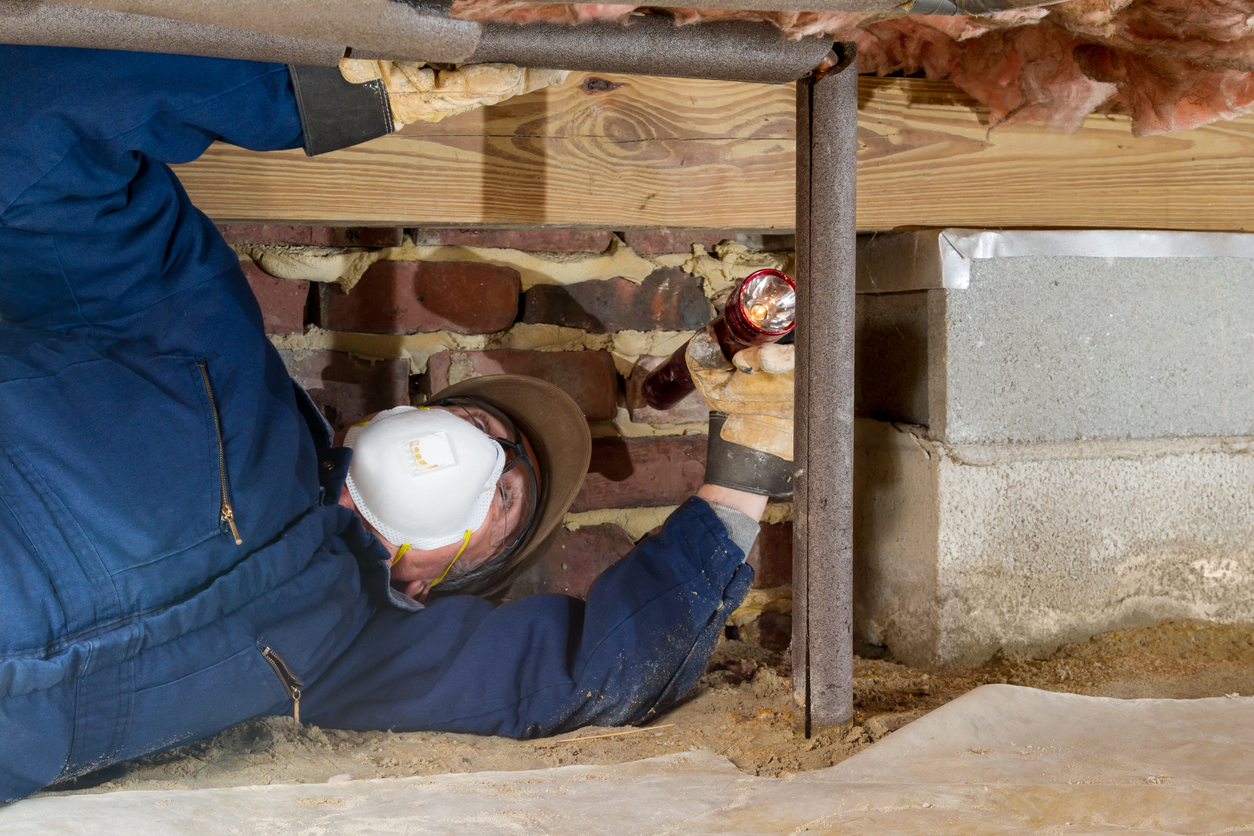
Here’s something most people don’t realize until they’re staring at a hatch in the floor: they’ve never actually been under their own house. And honestly, why would they? There’s no light down there, barely enough room to move, and no everyday reason to go looking. So when a crawl space inspection finally gets scheduled, whether that’s because of a real estate deal, a smell that won’t quit, or just wanting to know for sure, most people are walking in with zero idea what’s about to happen. That’s completely normal, and it’s worth actually walking through.
A lot of the nervousness people feel beforehand comes from bad assumptions, not the real process. Some folks think they need to clear out anything stored down there first. Others assume they’ll need to be crouched next to the inspector the whole time holding a flashlight. Neither is true. You don’t need to prep the space, and you definitely don’t need to be underneath the house yourself. The inspector handles all of that. Your part is mostly just answering a few honest questions before they head down.
Why Crawl Spaces Get Ignored for So Long
It makes sense, if you think about it. A leak under the kitchen sink gets noticed the same afternoon it happens. Something going wrong in a crawl space can sit there quietly for months before it ever becomes a smell or a symptom you’d actually notice from inside the house. And by the time it does show up upstairs, it’s usually already had a real head start. That’s the whole reason inspections get recommended on some kind of schedule, rather than only when something’s already gone wrong. Catching crawl space mold early is a completely different experience than catching it late.
Age gets blamed for this more than it probably deserves. Older homes come up in this conversation a lot, but it’s less about the house being older and more about the fact that it’s simply had more time for something to go unnoticed. A fifty-year-old crawl space that’s been kept an eye on can be in much better shape than a five-year-old one that’s had a slow leak sitting there since the day it was built.
Before Anyone Actually Goes Underneath
Every visit starts the same way, with a conversation, not a flashlight. What made you call? Has there been a leak or flood before? Has anyone in the house noticed a smell, or symptoms that seem to ease up whenever they’re not home? None of this is small talk. It’s what tells the inspector where to actually spend their time once they’re down there, instead of running through the exact same checklist regardless of what’s actually going on with your specific house.
What the Inspector Is Actually Looking For
Once they’re underneath, here’s what’s genuinely getting checked:
- Visible signs of moisture or mold on the joists, subfloor, insulation, and support beams
- Whether an existing vapor barrier is doing its job, or if it’s torn, gapped, or was never installed right in the first place
- Standing water, damp soil, or any evidence of past flooding along the crawl space floor
- Ventilation, and whether the vents that are supposed to be helping are actually open, blocked, or just too small for the space
- Any ductwork or plumbing running through the area, and the condition it’s in
- Signs of pests or wood-destroying insects, which tend to show up right alongside moisture problems
InstaScope real-time air analysis comes into play here too, and it’s not something we save for the main part of the house. Readings get taken right there in the crawl space, then compared against a reading from inside the living space, so we can actually tell whether whatever’s happening underneath is making its way up to where you and your family actually breathe. That’s usually the real question people have, even if they never quite phrase it that way.
When the HVAC System Ends Up Part of the Story
This one surprises people. Ductwork often runs straight through crawl spaces, so if there’s moisture or mold down there and the ducts are compromised or just sitting in a damp environment, whatever’s happening underneath can travel through the whole house every time the system kicks on. It’s one of the more common reasons a routine crawl space visit turns into a broader HVAC mold inspection without anyone planning for that going in. If there’s also a chemical smell or a ventilation concern mixed into the picture, we can bring in the same equipment we use for our VOC inspections, rather than sending someone back out for a second appointment.
How Long You’re Actually Looking At
Most visits run somewhere between thirty minutes and an hour for the crawl space itself, though a few things can stretch that out a bit:
- Tight clearance or awkward access points that just slow the whole thing down physically
- A crawl space with multiple sections or a layout that isn’t straightforward
- Something found early on that clearly deserves a closer look before moving on
- An older home with a documented history of leaks or past repairs that each need checking individually
Nobody needs to clear their whole afternoon for this. It’s a focused visit, not an event.
What You Actually Walk Away With
You get a real, documented report, usually with photos, because honestly, a lot of what’s found down there is hard to describe in words alone and much easier to just show you. Moisture readings, air quality comparisons, and anything worth flagging all get laid out clearly, along with straightforward next steps if something did turn up. SQS Services inspects and documents, that’s genuinely where our job ends. We don’t do remediation or vapor barrier work ourselves, so nothing about the report is shaped by wanting to sell you the next step. If you want the deeper version of everything crawl space moisture and mold can lead to, we’ve written more on that in our crawl space inspection guide.
That same honesty carries into any broader environmental testing we do in the same visit, so if a crawl space issue turns out to be tied to a bigger house air quality test, you get one coherent report instead of two separate findings you’re left trying to connect yourself. We’ve run into this exact situation with homeowners in smaller towns nearby too, including some work we did around Everton, where a crawl space concern ended up leading somewhere bigger during the same appointment.
If It’s Time to Get One Scheduled
If it’s been years since anyone’s looked under your house, or you genuinely can’t remember it ever happening, that’s really all the reason you need. It’s a short visit, and either way you walk away actually knowing something instead of just wondering. Take a look at everything we cover on our services page, check coverage for your area on our areas we serve page, and know that we’re out in Springfield MO, Joplin MO, and Fayetteville AR regularly.
Schedule a crawl space inspection with SQS Services and find out what’s actually underneath your home.