Older homes carry a certain kind of charm that newer construction just doesn’t have, but they also carry decades of small decisions that weren’t made with today’s building science in mind. Homes built before central air was standard, stone or block foundations instead of poured concrete, crawl spaces instead of full basements none of that makes a house poorly built, it just means the house was built in an era before vapor barriers and modern ventilation were the norm. Combine that with a climate that swings from humid summers to damp winters, and it’s not surprising that a mold inspection on an older home tends to turn something up more often than one on a newer build.
It’s rarely one obvious problem. It’s usually a combination of small things that have been quietly compounding for years a foundation that breathes a little more than it should, ventilation that was adequate decades ago but isn’t anymore, a crawl space nobody’s been down into since the last owner moved out. None of that shows up on a typical walkthrough, which is exactly why relying on “the house looks fine” isn’t the same as actually knowing it’s fine. A home can look immaculate on every visible surface and still have something developing in a space nobody thinks to check.
Crawl Spaces Are the Usual Culprit
Crawl space mold is one of the most common findings in older homes, mostly because nobody’s checking that space regularly enough to catch moisture before it’s been building for a while. It’s out of sight, it’s not part of anyone’s weekly routine, and by the time it’s noticeable from inside the house a smell drifting up through the floor, a slight change in how a room feels it’s usually been developing for months already. Ground moisture, poor drainage around the foundation, and a lack of proper ventilation down there all feed into the same problem, and older homes were rarely built with any of that in mind. You can see our full range of inspection work, including crawl spaces, on our services page.
Newer homes aren’t immune either, just for different reasons. A roof leak or a plumbing issue in a five-year-old house can create the exact same conditions as decades of gradual moisture buildup, just on a much faster timeline. Age isn’t the only factor, it’s just the most common one, because older homes have simply had more time and more opportunities for something to go wrong quietly.
What Usually Prompts Someone to Get Tested
Sometimes it’s a smell that won’t go away no matter how much the house gets cleaned, one of those things that’s faint enough to second-guess but persistent enough that it keeps coming back to mind. Sometimes it’s mold in house symptoms, someone in the family dealing with congestion, coughing, or irritation that seems to ease up whenever they’re not home, which is one of the more telling patterns even though it’s easy to write off as allergies at first. And sometimes there’s nothing dramatic behind it at all, just someone buying an older home and wanting a straight answer before closing, rather than finding out the hard way after the first humid season in the new place.
Real estate transactions are among the more common reasons this comes up. A buyer touring an older home might notice a slightly musty basement, or might simply know enough about older construction to want a test done as part of due diligence, separate from whatever the standard home inspector covers. Sellers sometimes go the other direction and get ahead of it, testing before listing so there’s documentation ready if a buyer’s inspector raises a concern later in the process.
Whatever brings someone to that point, the process stays the same on our end. We look at the areas most likely to be affected based on the age and layout of the specific house, not a generic checklist applied the same way to every property, and we test rather than guess at any point along the way.
How the Testing Actually Works
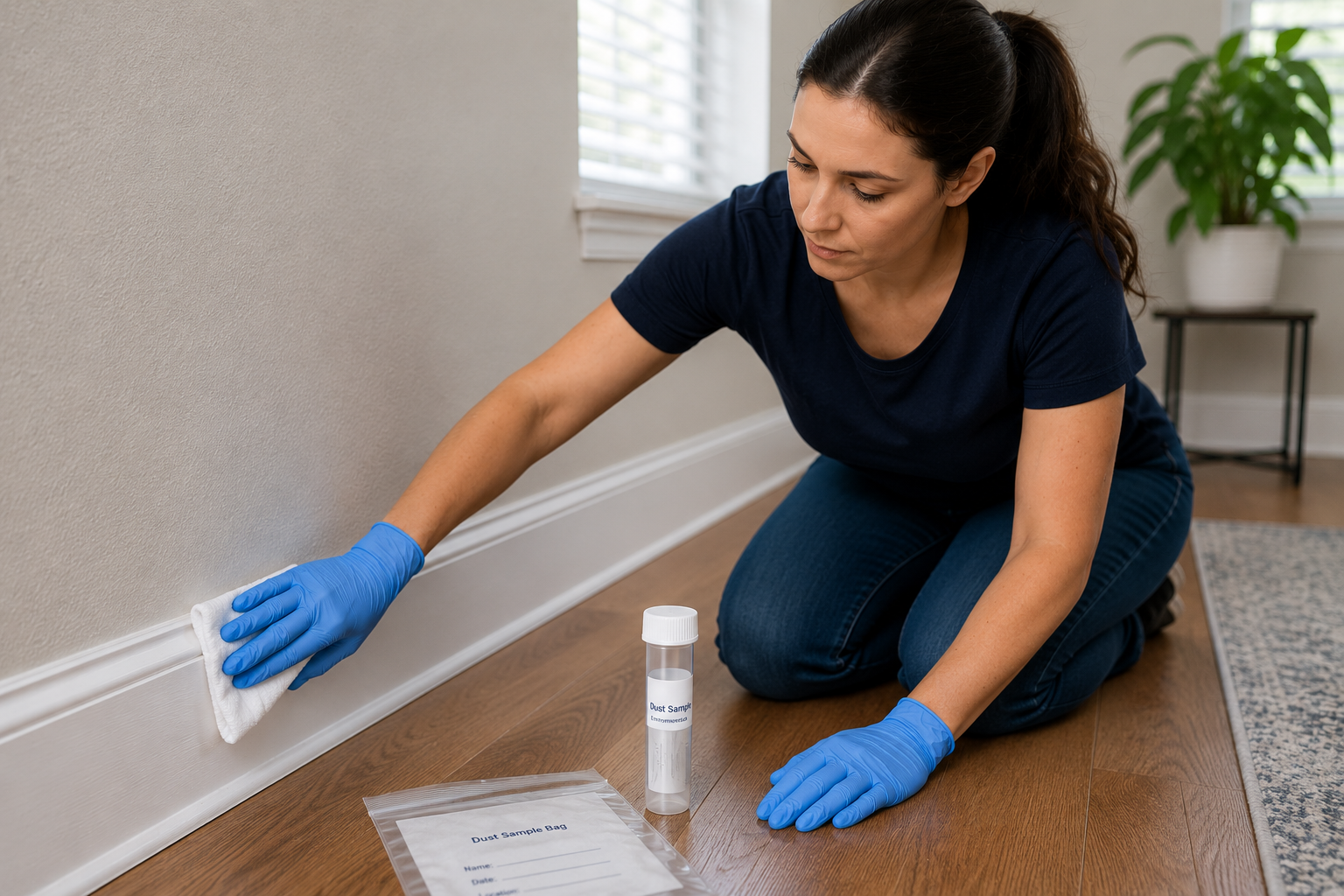
We use InstaScope real-time air analysis to get an immediate read on the air, which means you’re not waiting several days just to find out whether a deeper investigation is even warranted. Where the situation calls for it, we also bring in spore testing to confirm what’s actually present and at what level, since air readings alone don’t always tell the complete story. This isn’t a flashlight-and-hunch walkthrough where someone points at a discolored patch and calls it a day it’s measured, documented, and the report reflects what’s actually there, whether that’s a clean result or one that flags something worth addressing further.
SQS Services inspects. That’s the whole job, start to finish. We’re not handing you a report that conveniently points toward a remediation service, because we don’t offer one and never will, there’s no incentive built into our process to find a problem that isn’t there. Our team carries ACAC CMI, IICRC, and HAZWOPER certifications, and what you get back reflects that level of training, not a sales pitch dressed up as a report. You walk away with an answer, and what you do with that answer is entirely up to you.
Sometimes what looks like a mold question turns out to be something else, or something in addition to it a ventilation issue, a chemical off-gassing source from newer materials in an older shell, or general indoor air quality that’s just not great for reasons that have nothing to do with mold at all. In those cases, a full home health assessment covers more ground than a mold-only test, treating the house as one connected system rather than a single isolated concern. It’s worth asking about upfront if something about the situation feels broader than a simple “is there mold here” question, since bundling that into one visit is usually more efficient than testing for one thing, getting a clean result, and still not having your actual answer.
Getting an Inspection Scheduled
If an older home has been making you wonder — a smell that won’t quit, a family member who can’t shake symptoms at home, or just the fact that nobody’s ever checked the crawl space since you moved in — the fastest way to stop wondering is a straight, honest test rather than more guessing. It’s a small investment next to the cost of letting something sit unaddressed for another year or two, or the cost of finding out about a real issue after you’ve already closed on a home. Check our areas we serve page to confirm coverage, though we regularly work across Springfield MO, Joplin MO, and Fayetteville AR, and can usually get someone out quickly, especially for anyone working against a real estate deadline.
Schedule a mold inspection with SQS Services and get a clear answer, not a guess.