You found something. A dark patch behind the toilet, maybe, or a smell in the basement that wasn’t there last spring. You did what everybody does and searched for mold removal services, and now you’ve got a dozen tabs open and a knot in your stomach.
Before you call anyone for a quote, let me save you some money and some worry. The order you do things in matters more than who you hire.
First, how worried should you be?
Less than the internet wants you to be, and more than your landlord’s “it’s just a little mold” suggests.
The Institute of Medicine looked at the evidence back in 2004. Their conclusion: damp, moldy buildings are linked to coughing, wheezing and upper respiratory trouble, and they make asthma worse in people who already have it. They didn’t find good evidence for the scarier stuff, like brain fog and chronic fatigue. The World Health Organization reviewed the research a few years later and said people in damp homes have up to a 75 percent higher risk of respiratory symptoms. Two Berkeley Lab researchers estimated in 2007 that about one in five U.S. asthma cases connects to home dampness and mold. That’s around 4.6 million people.
So take it seriously, especially with kids, older folks or anybody with asthma in the house. Just know that “toxic mold is making me sick” is a much bigger claim than the science supports, and nobody can tell you that from a photo.
It’s never really a mold problem
It’s a water problem that mold shows up to announce.
The EPA’s rule is simple. If something gets wet, dry it within a day or two and mold usually never gets going. Keep the house under 60 percent humidity, and 30 to 50 is better. Past that, you’re playing odds.
This is where plenty of people get burned. A company scrubs, sprays and paints over a basement wall, and eight months later it’s back, because the water never stopped coming. You paid for the symptom. The report you want is the one that tells you where the water is coming from.
Small job or big job?
The EPA sorts cleanup by size, and it’s a decent gut check. Under 10 square feet is a small job. Ten to 100 is medium. Over 100, or anything touching the HVAC, is large, and that’s where you want professionals and containment.
Here’s how I’d think about it. A small spot on a hard surface, with a leak you’ve already fixed? Clean it, dry it, keep an eye on it. A musty smell with nothing you can see? That’s when you stop guessing. Mold hides in walls, under floors and in ducts, and your nose can only tell you something’s off.
The part nobody tells you about testing
There’s no federal limit for mold. None. The EPA says so plainly. So when a lab sends back a spore count, it isn’t pass or fail against some government number. Someone has to read it: indoor air against outdoor air, one room against another, all of it next to what the inspector measured in the walls.
Which means whoever reads it matters.
If the company that tests your house also sells the cleanup, you’re asking the person who profits from a bigger problem to tell you how big the problem is. Maybe they’re honest. Plenty are. But you’d never know, and that’s an awful position to be in with a few thousand dollars on the line.
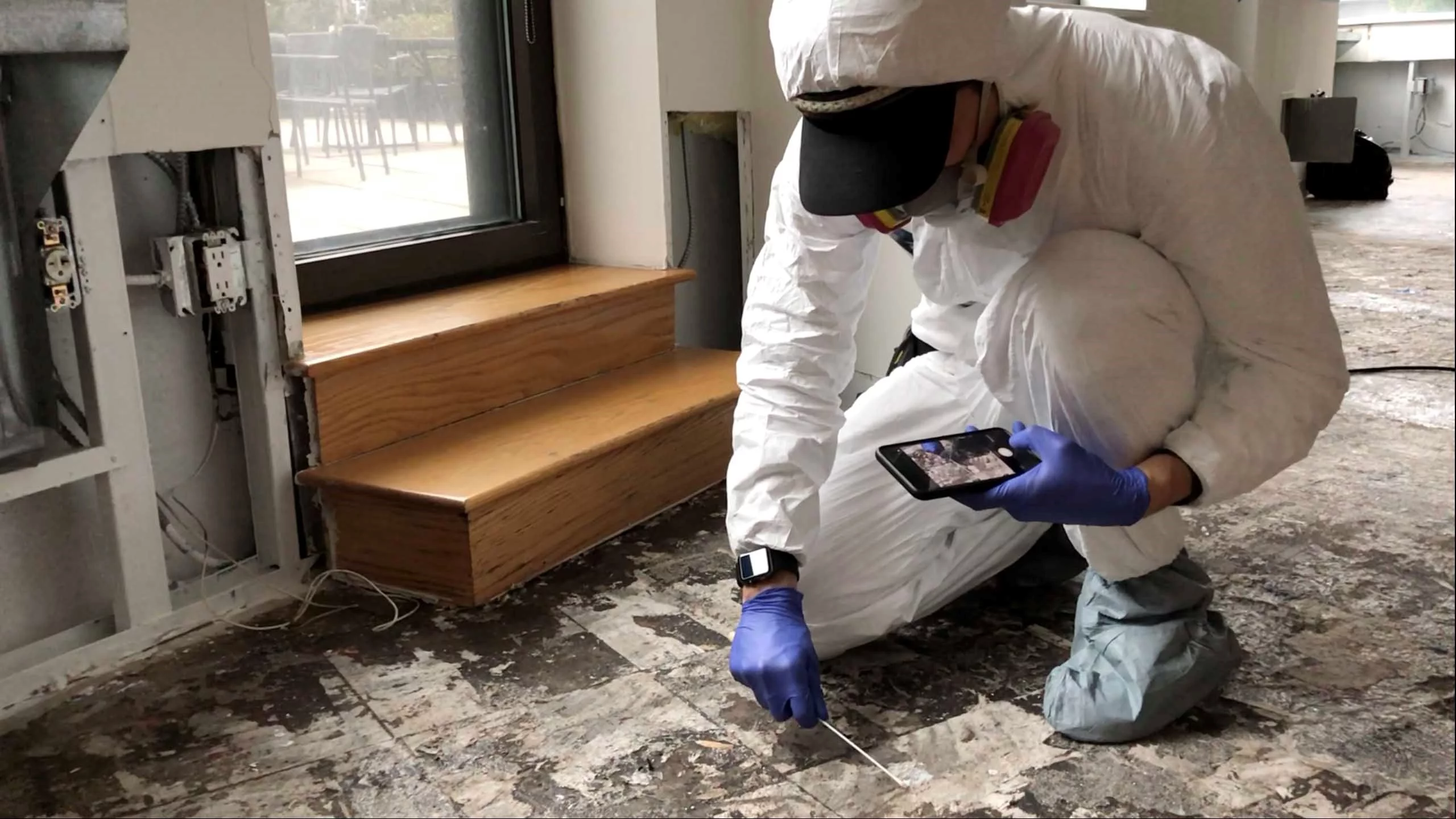
That’s the whole reason SQS only inspects. We don’t remove mold, we don’t partner with anyone who does, and there’s nothing for us to sell you after the report. Our inspectors are ACAC certified (that’s the CMI credential), and the team also holds IICRC and HAZWOPER certifications, so an ACAC certified mold inspector is the one in your house. We map moisture, take air and surface samples, and send them to an independent certified lab. We run InstaScope on site too, so you get a real-time read on the air while we’re standing there. Then you get a written report with photos. Hand it to any contractor you want.
An independent mold inspector is really just a second opinion that was never trying to sell you the first one. That’s what air and mold testing is worth.
“Okay, but how much does this cost?”
Fair question, and everyone asks it first. National numbers from HomeAdvisor’s 2026 data: the average mold inspection runs $689, with most landing between $303 and $1,075. A lab air sample is usually $250 to $350 on its own. If you’re asking about black mold testing cost, expect that to run higher, often $600 to $800 or more, because identifying a specific mold takes lab work. Color won’t tell you. A lab will.
Those are national averages, not our prices. Your house, your number of samples, whether the crawl space and ducts are in play, all of it moves the quote. If you want a real figure, give us a call or send a message. I’ll just say this: a really cheap test usually means fewer samples or no lab, and a test that can’t answer your question isn’t cheap. It’s wasted.
When you do get quotes for removal
Make every company work from the report, in writing. Ask what exactly they’re removing and replacing. Who fixes the water source, and when. How they’ll keep the rest of the house clean while they work. What the price covers. And how anyone will confirm it worked, ideally somebody other than the crew that did it.
Walk away if it’s a “free inspection” ending in a same-day quote and a deadline. Walk away from any report without moisture readings and photos. And definitely walk away from anyone who identifies a mold by looking at it.
What a visit with us looks like
We start by asking about the house. Leaks, floods, old repairs, the smell, who’s been coughing. Then we go through it from attic to crawl space. No tearing into walls. You can read the specifics on our mold inspection page, see what happens under the floor on our crawl space inspection page, or browse everything on the services page. We work in Springfield, Joplin, Carthage, Fayetteville and the towns around them, and the areas we serve page has the details.
We aren’t doctors. If someone in your house is having symptoms that won’t quit, see one, and take the report along.
Short answers
Can you recommend a removal company? No. We have no ties to any of them, and that’s the point.
What if the report says I don’t need removal? Then you kept your money, and you’ve got paper showing the house was checked.
Should I retest after the work? Yes, if you can. Have someone besides the crew confirm it.
If you’re staring at a stain right now and wondering does my house have mold, start there. Book an independent inspection with SQS or call (417) 323-6235.