There’s a moment right before an inspector shows up where most people start second-guessing whether they even need to be there for it. Should they follow along room to room, or just let the inspector work and stay out of the way? Is there anything they should do to prepare, or clean up first? It’s a fair thing to wonder about, especially the first time. Indoor air quality testing isn’t something most homeowners go through more than once or twice in their life, so there’s rarely a frame of reference walking in.
It also doesn’t help that the term gets used loosely online, sometimes referring to a five-minute DIY kit, sometimes to a full professional visit with lab-confirmed sampling. Those are genuinely different things with genuinely different levels of usefulness, and knowing which one you’re actually booking matters more than most people realize going in.
Before the Inspector Arrives
There’s genuinely not much prep required, which tends to surprise people expecting a longer checklist. You don’t need to clean the house, and in fact an overly scrubbed, freshly ventilated home the morning of a test can sometimes mask exactly the conditions the inspection is trying to capture. What’s more useful is simply being ready to answer a few questions honestly, when did the smell start, has this room ever flooded, is there a family member dealing with symptoms that seem tied to being home? That context shapes where attention gets focused once the inspector is actually on site.
If you’ve had any mold testing Springfield MO companies do previously, whether through us or someone else, having that report on hand is genuinely helpful. It gives a baseline to compare against, rather than starting from zero every time. This applies just as much in smaller surrounding communities, we’ve done similar visits for homeowners around Everton and other nearby towns, and the same logic holds regardless of where the property sits.
One thing worth mentioning, since it comes up often enough to address directly: keeping the house sealed up tight the night before, no open windows, no running fans, isn’t necessary and doesn’t meaningfully change results either way. Live in the house normally right up until the appointment. Trying to stage conditions one way or another tends to just add stress without changing what the equipment picks up.
What the Visit Itself Looks Like
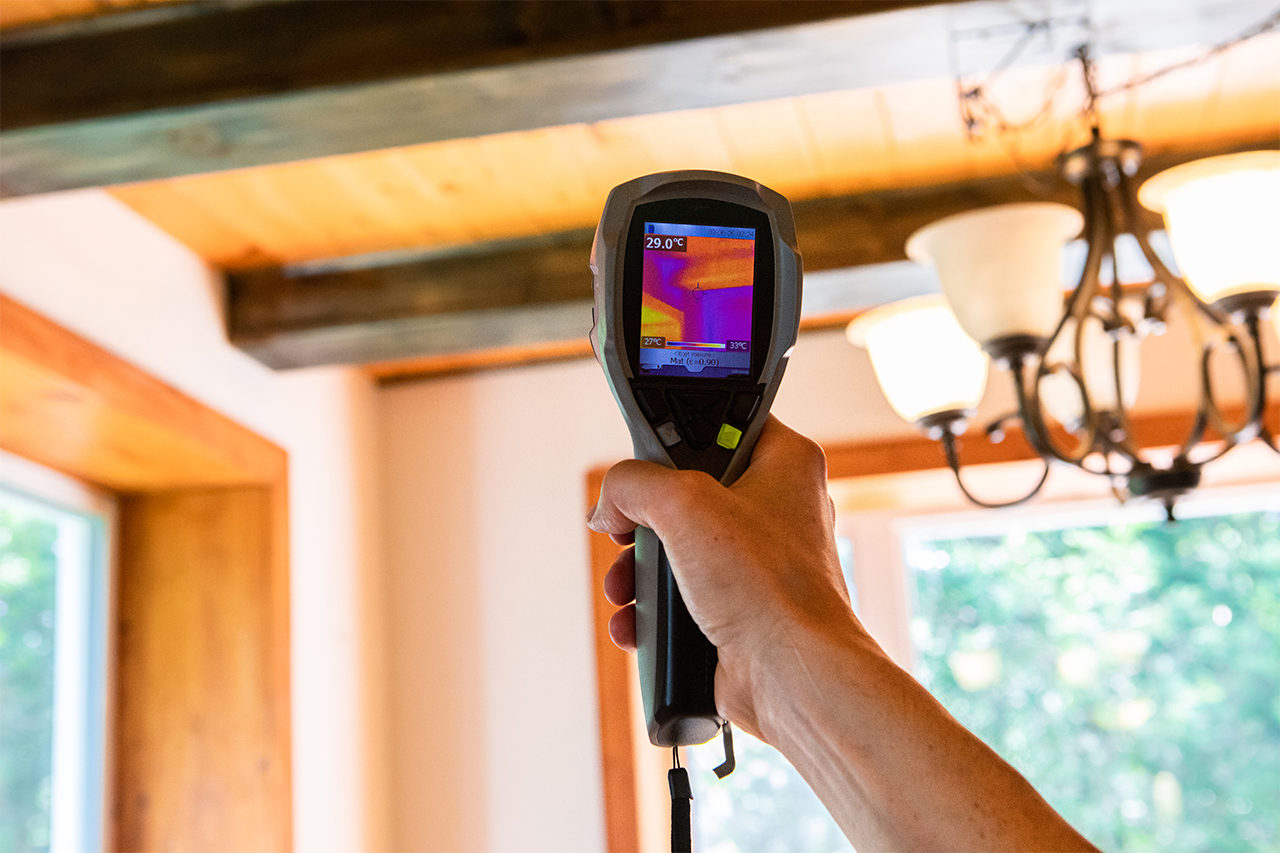
The visit usually starts with a walkthrough conversation, not equipment. This is where whatever prompted the call gets discussed directly, the smell, the stain, the symptoms, the timeline. From there, InstaScope real-time air analysis gets used to get an immediate baseline reading in the areas of concern, along with at least one comparison reading elsewhere in the house. This is the part that surprises people the most, since it doesn’t require the multi-day wait that a lot of people expect from any kind of environmental testing.
Depending on what that initial read shows, the inspector may take additional surface or air samples for lab confirmation. This happens selectively, based on what the readings actually suggest, not as a blanket step applied to every visit regardless of findings. Some visits wrap up with just the real-time results and a clean bill. Others involve a bit more sampling because something in the initial read warrants a closer look. It’s worth knowing going in that a longer visit isn’t automatically bad news, sometimes it just means the inspector is being thorough about a borderline reading rather than rushing past it.
If VOCs or Chemical Sources Are a Factor
If the situation involves recent renovations, new flooring, or fresh cabinetry, voc testing sometimes gets added into the same visit, since off-gassing chemicals can produce symptoms that overlap with what people usually attribute to mold. It’s a natural extension of the same air analysis equipment rather than a separate appointment, so it rarely adds meaningful time to the visit itself. We’ve broken this piece out in more detail on our VOC inspections page, which is worth a look if new materials in the home are part of what prompted the call in the first place.
Common Misconceptions Going In
A few assumptions come up over and over with first-time clients, and most of them aren’t quite right. One is that a visible stain automatically means active mold, when it’s frequently just old staining from a leak that’s already been fixed. Another is that a completely odorless house means there’s nothing to find, when some sources produce very little smell at all, especially early on. And a common one on the opposite end, that any musty smell automatically means a serious problem, when plenty of older homes carry a mild, harmless mustiness tied to age and material rather than active growth. Testing exists precisely to sort real signal from these kinds of assumptions.
What Happens With the Results
This is usually the part people care about most, and it’s also where the value of an independent inspector shows up clearest. You get a documented report with the actual readings, not a verbal summary or a vague pass-fail. If lab samples were taken, those results typically follow within a few business days of the visit itself. SQS Services inspects and tests only, so the report you receive isn’t shaped by whatever comes next. Whether the results are clean or flag something worth addressing, what you do with that information afterward is entirely your call. You can see the fuller range of what a visit like this can include on our services page.
Anyone who’s gone through air quality testing Springfield MO companies offer before will usually say the same thing afterward, that the process itself was a lot more straightforward than they expected going in. It’s a conversation, a reading, sometimes a sample or two, and then an answer. There’s no dramatic equipment, no all-day process, and nothing that requires you to prepare the house as if company’s coming.
This is also true for testing bundled into a broader home inspection, which is fairly common for buyers going through a purchase process. We regularly handle these as part of full home inspections, similar to the work we’ve done for homeowners around Sarcoxie, where air quality testing gets folded into the same visit as the rest of the inspection rather than requiring a second appointment entirely.
If Something Does Turn Up
Getting a result that flags a concern isn’t the end of the process, it’s just the point where you actually have real information to work with. The report identifies what was found and roughly where, which is enough to start getting quotes from remediation companies if that’s the direction you need to go. Because SQS Services doesn’t do remediation work, there’s no pressure baked into how that result gets delivered or explained to you. It’s simply handed over as it is, and the next step is entirely yours to take at whatever pace makes sense.
Deciding Whether You Need One
If you’ve been putting off a house air quality test simply because you weren’t sure what it involved, that uncertainty is usually the biggest barrier, more than cost or scheduling. Knowing the visit is a conversation followed by a reading, not a disruptive multi-day process, tends to make the decision a lot easier. It’s also worth remembering that a clean result is still a useful result. Peace of mind that comes from an actual reading is worth more than peace of mind that comes from simply not asking the question.
Coverage details for your specific area are on our areas we serve page, and we regularly work across Springfield MO, Joplin MO, and Fayetteville AR, along with the smaller communities in between.
Schedule an indoor air quality test with SQS Services and see for yourself how straightforward the process actually is.